
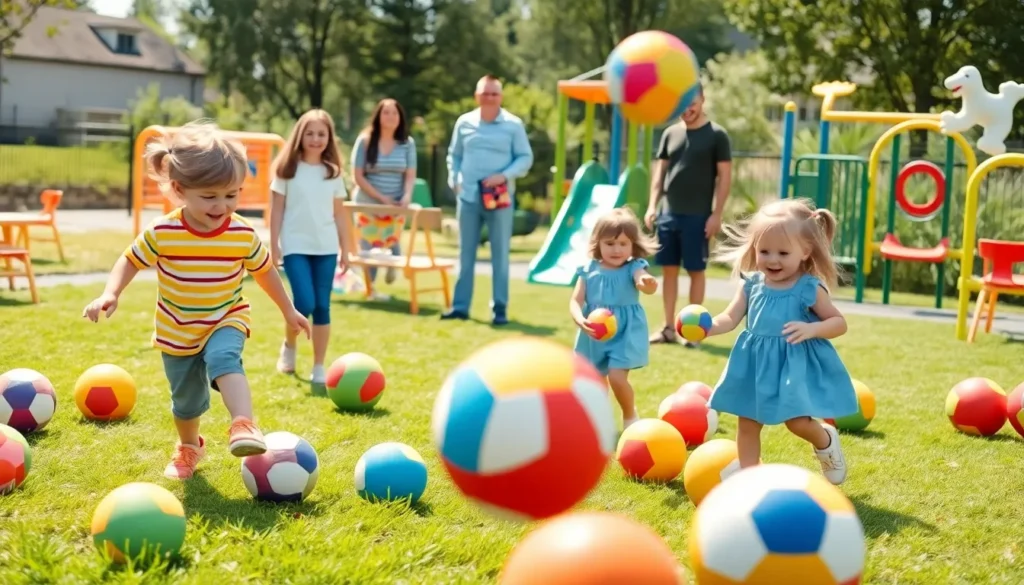
When it comes to preschool activities, nothing quite rolls into the spotlight as effectively as balls. These simple spheres are not only fun to chase and throw, but they also serve as fantastic tools for learning and development. From hopscotch to soccer, the possibilities are endless. So, let’s bounce into the benefits of ball activities and discover how they can set the stage for a healthy, active, and playful preschool era. Truly, when your little one plays with a ball, they’re not just playing: they’re learning, socializing, and developing essential skills, all while deftly avoiding their next snack time.
Benefits Of Ball Activities
Enhancing Motor Skills
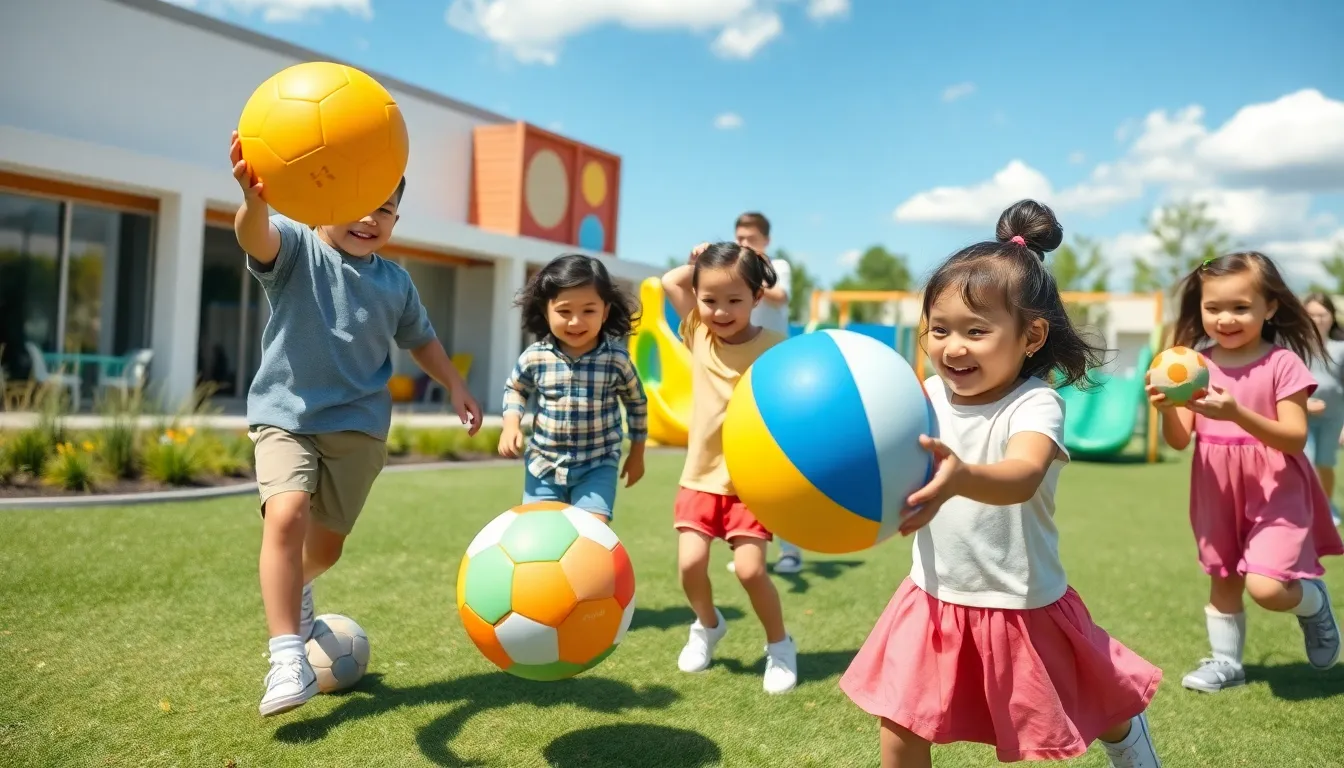
Ball activities are a great way to enhance both gross and fine motor skills in preschoolers. When children kick, throw, or catch balls, they engage their whole body, fine-tuning coordination and balance. Tossing a soft ball back and forth fosters hand-eye coordination, while kicking helps develop spatial awareness. These physical skills are foundational for later activities like writing or riding a bike.
Promoting Social Interaction
Imagine groups of children teaming up for a game of catch, it’s not just a game: it’s a social mixer. Ball activities create opportunities for preschoolers to interact, share, and communicate. They learn essential social skills like teamwork and turn-taking, which are vital in this developmental stage. Whether it’s high-fives after a successful throw or giggles after a missed catch, these joyful interactions lay the groundwork for lasting friendships.
Encouraging Physical Fitness
In today’s screen-saturated world, keeping preschoolers active can be a challenge. But, ball activities provide a fun way to encourage physical fitness. Running after a ball or participating in team games aids in building endurance and strength. Plus, the physical activity supports overall health, helping to instill lifelong habits of exercise and activity. Let’s face it, a little ball action goes a long way in preventing that couch potato syndrome.
Fun Ball Activities For Preschoolers
Ball Toss Games
What’s more thrilling than a little friendly competition? Ball toss games are a hit among young children. Using soft balls, preschoolers can practice throwing into buckets or baskets. Not only do these games hone their throwing skills, they also introduce a gentle element of scoring and excitement. Want to up the ante? Add colorful targets that encourage children to strive for accuracy.
Dribbling Challenges
Why dribble a basketball when you can dribble a beach ball? Using larger balls, children can engage in dribbling challenges that develop coordination and control. Set up a mini obstacle course in the play area, where they navigate around markers or cones. This can increase both their skill level and a bit of playful chaos, perfect for young learners.
Ball Rolling Activities
Get those little bodies moving with ball rolling fun. Preschoolers can sit or lie down and roll the ball back and forth to one another. This promotes coordination while being a silly, giggly experience for everyone involved. Plus, try adding varying speeds by rolling faster or slower, and watch their reactions, it’s a delightful spectacle.
Soccer Skills for Little Ones
Who says toddlers can’t be the next soccer stars? Setting up basic soccer drills can get those tiny feet moving in no time. Introduce them to simple kick and goal concepts, no fancy footwork required. Just kick the ball towards a designated area and cheer them on. It’s a great way to instill teamwork and sportsmanship right from the start.
Creative Ball Crafts
DIY Ball Decorations
Let’s take the play indoors with some creative ball decorations. Gather a few plain balls and let preschoolers unleash their artistic flair with paint, glitter, or markers. Not only does this foster creativity, but it also helps with fine motor skills as they manipulate their brushes and colors. Plus, at the end of the crafting session, each child can proudly parade their personalized ball.
Ball-Themed Art Projects
Ball-themed art projects can include everything from painting on canvases to creating collages with ball imagery. Children can even make up stories inspired by their creations, think imaginative tales of a superhero ball saving the day. Associating art with movement encourages a well-rounded education that captivates both artistic and physical interests.
Incorporating Learning Through Balls
Color and Shape Recognition
Why not integrate learning into playtime? Use balls of different colors and sizes to teach preschoolers about color and shape recognition. Ask them to name the colors as they play and categorize the balls by size. Such engaging methods ensure that they grasp these concepts more naturally, promoting cognitive development amidst the fun.
Counting and Mathematical Concepts
Ball activities can even dabble in math. Encourage preschoolers to count how many times they can bounce a ball or how many successful catches they make. These simple activities introduce counting, addition, and subtraction in a playful framework, turning potential math frustrations into joyful interactions.
Safety Tips For Ball Activities
Choosing Age-Appropriate Balls
Safety is paramount when it comes to ball activities. Always select age-appropriate balls that are lightweight and soft to minimize injury risk. Giant beach balls are usually a safe option for toddlers, while slightly heavier balls work well for older preschoolers. Size matters, too big or too small can lead to frustration or mishaps.
Supervising Playtime
Parents and teachers should always supervise playtime, especially during ball activities. Watch for errant throws or kicks, ensuring that kids maintain a safe distance from each other. This is crucial to prevent accidents and ensure a fun atmosphere where children feel secure to play and explore.


